
Roach Gel Bait vs Spray: What Actually Works
Last updated: 2026-07-17
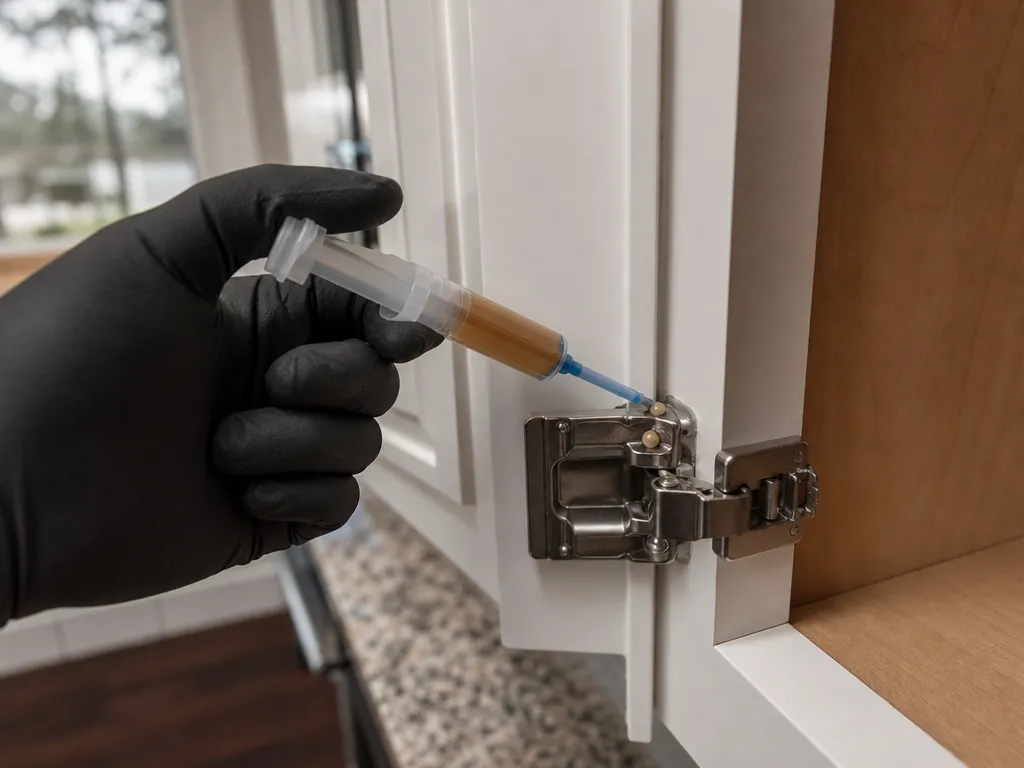
Walk into any Houston hardware store and the roach aisle is mostly sprays. For German cockroaches, that is backwards. Gel bait paired with an insect growth regulator eliminates the breeding population, while repellent sprays kill only the roaches you can see and often make the infestation worse. Understanding why comes down to how each product interacts with roach behavior.
Why gel bait beats spray for German roaches
Gel bait works because roaches carry the active ingredient back to the harborage and kill nestmates they never contact directly. When a foraging German roach eats gel bait, it returns to the hidden cluster and dies there. Other roaches then feed on the contaminated feces (coprophagy) and the dead body (cannibalism), spreading the insecticide through the colony in a chain called secondary or horizontal transfer. Active ingredients like fipronil, indoxacarb, and hydramethylnon are formulated specifically for this transfer effect.
Spray does none of that. A contact aerosol kills the individual roaches it directly hits, the exposed foragers, but never reaches the egg cases and nymphs clustered in wall voids. Because German females carry protected egg cases holding 30 to 48 eggs, the reproductive core survives any surface spray, and the population rebounds within weeks. Texas A&M AgriLife Extension guidance (citybugs.tamu.edu) recommends baiting as the backbone of German cockroach control for exactly this reason.
Repellent vs non-repellent: the distinction that matters
Repellent products scatter a German colony; non-repellent products let roaches carry the dose home. This is the most important and least understood point in roach control.
- Repellent insecticides (most common pyrethroid baseboard sprays) are detectable to roaches, which avoid treated surfaces. For a German infestation this is counterproductive: instead of eliminating the colony, the spray pushes survivors deeper into voids and adjacent rooms, fragmenting and spreading it.
- Non-repellent insecticides and gel baits cannot be detected and avoided. Roaches walk through or feed on them and carry the dose back to the harborage, where transfer effects take hold.
The practical takeaway: if you must use a liquid at all, a non-repellent formulation reaches the colony, while a repellent one just relocates the problem. This behavior difference is the same reason a baseboard fog cannot fix an infestation, a point we cover in German roaches vs tree roaches in Houston.
Add an IGR: stopping the next generation
Bait kills foragers, but an insect growth regulator stops the eggs and nymphs from ever maturing. IGRs such as pyriproxyfen and hydroprene mimic insect hormones and prevent nymphs from developing into breeding adults, and they can cause adults to produce twisted, non-functional wings and sterile offspring. On their own they do not knock down a population fast, but combined with gel bait they close the reproductive loop.
This pairing matters because of timing. German roaches take roughly 50 to 60 days to go from egg to adult, and the protected egg cases keep hatching after you bait. An IGR ensures that the nymphs emerging from those cases cannot rebuild the colony, which is why professionals almost always combine the two. The full professional sequence is covered in how exterminators get rid of German roaches.
Bait aversion: why gel sometimes fails
If roaches stop eating a bait that worked before, you are likely seeing glucose aversion. Some German cockroach strains have evolved a genetic aversion to glucose, the sugar used as a feeding stimulant in many sweet gel baits. Averse roaches taste the glucose as bitter and refuse the bait, so the population survives even though bait is present. This is a documented, heritable trait, not a fluke.
The fix is bait rotation. Switching to a bait with a different formulation or feeding matrix, and rotating products over time, prevents both glucose aversion and behavioral resistance from shutting down your program. Placement also matters: bait must go directly in and next to harborage cracks, in many small dabs rather than a few large ones, so foragers encounter it on their normal routes.
Bait also has a shelf life once placed. In a warm, greasy kitchen, gel can dry out, get coated in dust, or absorb competing odors, all of which reduce how readily roaches feed. Fresh placements are more attractive than old ones, which is one reason professional programs refresh bait on follow-up visits rather than assuming the first application lasts indefinitely. Old, crusted bait is a common reason a program that started well appears to stall.
When spray still has a role
Spray is not useless, it is just the wrong tool for a German kitchen infestation. There are situations where a liquid application makes sense, mostly outdoors and mostly non-repellent. For large tree roaches (American and smoky brown) invading from the yard, a targeted exterior perimeter treatment reduces the population pressing against the foundation, since those roaches breed outside and baiting the kitchen does nothing for them. Dust formulations such as boric acid or diatomaceous earth also have a place in dry, undisturbed voids and wall cavities, where they persist and roaches pick them up crossing the surface.
The key is matching formulation to location and behavior: non-repellent products and dusts in the right places, gel bait at indoor harborage, and repellent aerosols essentially never for German roaches. Where roaches are coming from decides the tool, which is why identifying the species first, covered in German roaches vs tree roaches in Houston, is not optional.
How professionals combine methods
Professionals rarely rely on a single product; they layer methods matched to the biology. A typical German-roach program uses monitoring to find harborage, a vacuum to knock the population down fast, gel bait as the primary kill, an IGR to sterilize the next generation, and dust in voids where bait cannot go. Repellent sprays are deliberately kept away from bait zones. This integrated approach, not any one “best” product, is what separates a lasting fix from a temporary knockdown, and it is why store-bought spray-only efforts so often fail.
The mistake that ruins gel bait
Never spray over or near your bait placements. Repellent spray residue contaminates gel bait and repels roaches away from it, so the two products cancel each other out. Homeowners frequently bait and then spray the same areas “to be thorough,” which wastes both. If you bait, keep repellent sprays away from those zones entirely.
| Factor | Gel bait + IGR | Repellent spray |
|---|---|---|
| Reaches the harborage | Yes, via transfer | No |
| Affects egg cases/nymphs | Yes, with IGR | No |
| Effect on survivors | Killed through colony | Scattered, spread |
| Long-term result | Population decline | Rebound in weeks |
| Common failure mode | Bait aversion (fixable) | Never addresses breeders |
Bottom line for Houston homes
For a German infestation, choose gel bait plus an IGR, place it in harborage cracks, rotate baits to beat aversion, and keep repellent spray away from your placements. Spray alone is the reason so many Houston roach problems never end. For large tree roaches coming in from the yard, the strategy shifts to exclusion and exterior work instead, which is a different playbook.
If you would rather have a licensed pro handle bait placement, IGR selection, and follow-up correctly the first time, compare the companies in our Houston roach exterminator directory. We called them for real quotes, and full pricing ranges are on our cost page.
Frequently Asked Questions
- Is gel bait better than spray for roaches?
- For German cockroaches, yes. Gel bait is carried back to the harborage and kills roaches you never see through secondary transfer, while repellent sprays only kill exposed foragers and scatter the rest. Bait plus an insect growth regulator addresses the breeding population that spray leaves untouched.
- What is a non-repellent insecticide?
- A non-repellent insecticide is one roaches cannot detect and avoid, so they walk through it and carry it back to the harborage. Repellent products, mainly common pyrethroid sprays, drive roaches away from treated surfaces, which spreads a German colony deeper into walls instead of eliminating it.
- Why did my roach gel bait stop working?
- Two common reasons: bait aversion and contamination. Some German roach strains are genetically averse to glucose in sweet baits and stop eating them, so rotating to a different bait matrix helps. Spraying near bait placements also repels roaches from the bait, making it useless.
Dealing with this right now? See the top roach extermination companies in Houston and what treatment should cost.