
How Exterminators Get Rid of German Roaches
Last updated: 2026-07-17
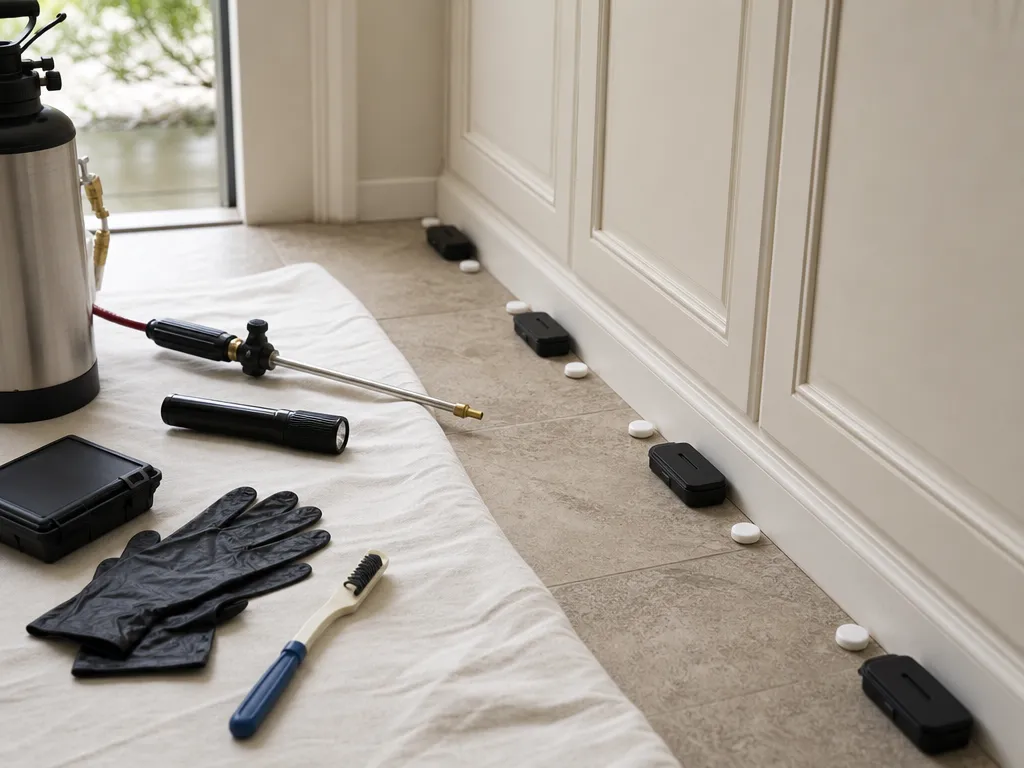
Professional German cockroach control looks nothing like spraying a can around the kitchen. It is a sequence, inspection, knockdown, baiting, growth regulation, and scheduled follow-up, built around the specific biology of Blattella germanica. Knowing the steps tells you what to expect, why it takes more than one visit, and how to judge whether a company is doing the job right.
Step 1: Inspection and monitoring
The first thing a good technician does is find the harborage, not spray. German roaches cluster in hidden cracks within a few feet of food, water, and warmth, so the technician inspects the kitchen and bathroom closely: behind and under the refrigerator, around the dishwasher, under the sink, behind the stove, and inside cabinet seams. They may use a flushing agent to drive roaches into view and place sticky monitors to map where activity is heaviest.
This step defines everything that follows, because bait only works if it is placed where roaches actually travel. Texas A&M AgriLife Extension guidance (citybugs.tamu.edu) stresses that locating harborage and using monitors to track it is the foundation of German cockroach control. The technician also assesses sanitation and moisture, since competing food sources make bait less attractive. Knowing the signs yourself helps, which we cover in signs of a roach infestation.
Step 2: Vacuuming for fast knockdown
For heavy infestations, professionals often vacuum first to remove large numbers of roaches immediately. A HEPA-filtered vacuum physically removes adults, nymphs, egg cases, and droppings from harborage areas in minutes. This does two things: it drops the population fast so bait is not overwhelmed, and it pulls out protected egg cases that would otherwise hatch later.
Vacuuming also removes the fecal material and shed skins that carry aggregation pheromones, reducing the chemical cues that keep roaches clustering in that spot. It is a mechanical, pesticide-free step that makes the chemical steps that follow more effective.
Step 3: Gel bait placement
The core of the treatment is gel bait placed precisely in and beside harborage cracks. Rather than spraying surfaces, the technician applies many small dabs of gel bait directly where roaches hide and travel, inside cabinet corners, along cracks, behind appliances, near plumbing penetrations. Roaches eat the bait, return to the harborage, and die, and the insecticide spreads through the colony as other roaches feed on the contaminated feces and dead bodies (secondary transfer).
Placement quality matters more than quantity: bait in the wrong spot is ignored, and bait sprayed over with repellent product is repelled and wasted. Professionals also rotate bait formulations to counter bait aversion, a genetic trait in some strains that makes roaches refuse glucose-based sweet baits. The full comparison of why bait beats spray is in roach gel bait vs spray.
Step 4: Insect growth regulator (IGR)
An IGR is added to stop the next generation from maturing. Insect growth regulators such as pyriproxyfen mimic insect hormones and prevent nymphs from developing into breeding adults. On their own they do not kill quickly, but paired with gel bait they close the reproductive loop: bait kills foragers, the IGR ensures that the nymphs hatching from surviving egg cases cannot grow up to breed. This combination is standard in professional programs and is the main reason results hold instead of rebounding.
Step 5: The follow-up and why 2 to 3 visits are needed
Professionals return in about two weeks because German egg cases survive the first treatment and keep hatching. This is the single most important thing to understand about roach elimination. A German female carries an ootheca holding 30 to 48 eggs, and that hardened case shields the eggs from bait and insecticide. Cases hatch within a few weeks, so nymphs the first visit could not reach keep emerging.
Because the egg-to-adult cycle runs roughly 50 to 60 days, a single visit cannot break it. The follow-up schedule is built to catch each wave:
| Visit | Timing | Purpose |
|---|---|---|
| Visit 1 | Day 0 | Inspect, vacuum, bait harborage, apply IGR |
| Visit 2 | ~2 weeks | Bait roaches hatched from surviving egg cases; refresh bait |
| Visit 3 | ~4 to 6 weeks | Confirm elimination; treat any remaining pockets |
Most infestations clear in two to three visits over four to six weeks. A company promising total elimination in one visit is either overselling or planning to over-spray, which scatters the colony. Steady follow-up, not a single heavy treatment, is what works.
Sanitation and moisture the tech will address
A good technician treats the conditions, not just the roaches. During and after the visits, expect guidance on sanitation and moisture, because these determine whether the treatment holds. Competing food makes bait less attractive, so the tech will point out grease buildup behind the stove, crumbs in cabinet seams, and food left uncovered. Moisture matters just as much: a leaking trap under the sink or a running toilet gives roaches the water they need to survive even a well-baited kitchen, so leaks get flagged for repair.
This is why the best results come from a partnership. The technician places bait and IGR correctly, but if the kitchen keeps offering easy food and water, the population regenerates faster than the program can suppress it. Extension guidance frames German cockroach control as integrated pest management: chemical treatment plus sanitation, moisture reduction, and exclusion working together, not bait alone.
How to tell a good job from a bad one
You can judge the quality of the work by what the technician does and does not do. Good signs: they inspect and use monitors before treating, they place many small bait dabs in cracks rather than spraying surfaces, they add an IGR, they schedule a follow-up, and they talk to you about sanitation and moisture. Warning signs: they spray baseboards heavily on the first visit, they promise total elimination in a single trip, or they skip inspection and go straight to fogging. Heavy repellent spraying scatters German roaches and undermines bait, so a spray-first approach for a German infestation is a red flag, not thoroughness.
What you can do to help it work
Your prep decides how well the treatment lands. Empty cabinets the technician needs to reach, fix leaks that give roaches water, clean up grease and food residue that competes with bait, and reduce cardboard clutter that provides harborage. Avoid spraying store-bought repellents after a professional bait job, because they repel roaches from the bait and undo the program.
One more expectation to set: results are not instant. Because the program works through the colony over the egg-to-adult cycle rather than killing on contact, you will still see some roaches in the first week or two, often more at first as the population is flushed toward bait. A steady decline over the follow-up visits is the sign it is working. Judge the outcome at the end of the schedule, not the day after visit one, and resist the urge to spray in between.
Ready to get it done right
Getting rid of German roaches is a process, inspect, vacuum, bait, regulate growth, and follow up, not a one-time spray. The companies in our Houston roach exterminator directory run this full sequence and schedule the follow-up visits that actually break the breeding cycle. We called them for real quotes, so you can compare before you commit; full pricing ranges are on our cost page.
Frequently Asked Questions
- How do professionals get rid of German roaches?
- Professionals inspect to locate harborage, vacuum to knock down the population fast, apply gel bait in cracks near the harborage, and add an insect growth regulator to stop nymphs from maturing. They return in about two weeks to bait roaches that hatched from protected egg cases after the first visit.
- How many visits does it take to get rid of roaches?
- Usually two to three visits over four to six weeks. German egg cases are protected and keep hatching for weeks after the first treatment, and the egg-to-adult cycle runs about 50 to 60 days. Follow-up visits catch each new wave of nymphs before they can breed.
- Why do exterminators come back after two weeks?
- Because German egg cases survive the first treatment. Each case holds 30 to 48 eggs and hatches within a few weeks, producing nymphs the initial bait did not reach. The two-week follow-up baits those newly hatched roaches before they mature and lay more eggs.
Dealing with this right now? See the top roach extermination companies in Houston and what treatment should cost.