
Why Roaches Come Inside After Rain in Houston
Last updated: 2026-07-17
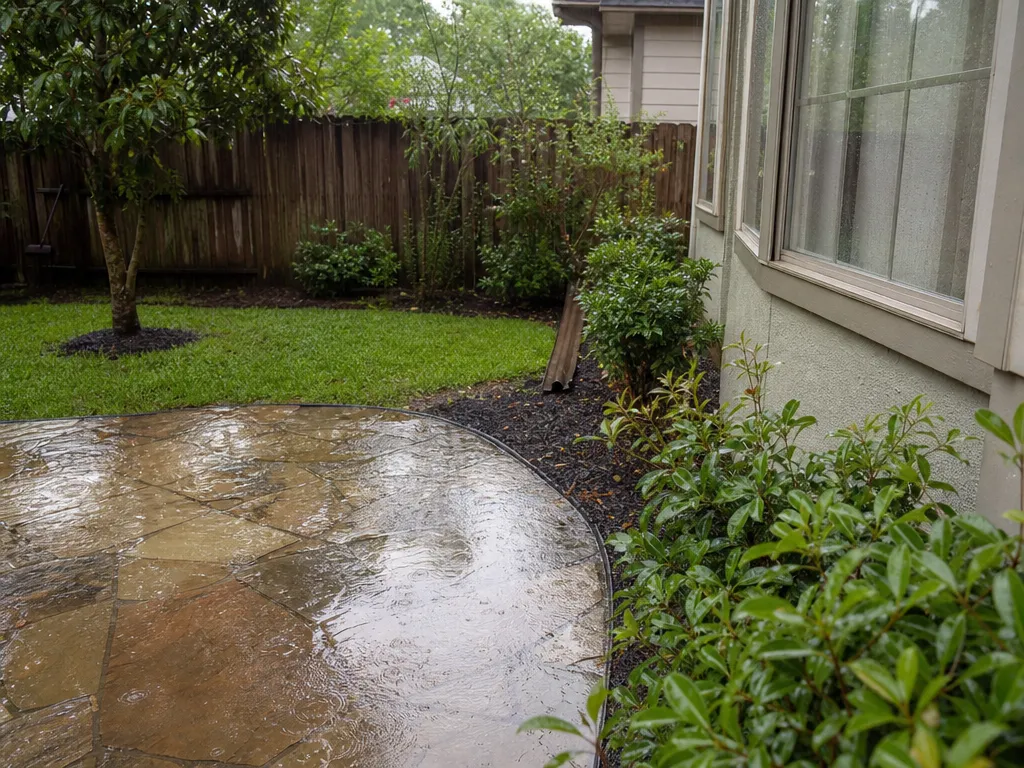
Every Houston homeowner knows the pattern: a hard rain rolls through, and within a day large roaches turn up in the garage, bathroom, and kitchen. This is not a coincidence and it is not a sanitation failure. It is the predictable response of the region’s big outdoor roaches to a flooded Gulf Coast landscape, and it is preventable with the right exterior work.
Why rain pushes roaches indoors
Heavy rain floods the outdoor spaces where large roaches live, so they migrate to the nearest dry shelter, which is your home. The American cockroach (Periplaneta americana) and smoky brown cockroach (Periplaneta fuliginosa) are peridomestic, meaning they normally live outdoors in sewers, storm drains, mulch beds, tree holes, wood piles, and gutters. When Houston’s intense rainfall saturates that habitat, standing water displaces them and they move upward and inward toward dry ground.
The same behavior happens in reverse during drought: when outdoor moisture disappears, these roaches move indoors seeking water. Both extremes drive the large “tree roaches” toward the house, which is why Houston’s wet-dry cycles produce recurring invasions. Texas A&M AgriLife Extension notes that peridomestic roach pressure on structures rises sharply when outdoor conditions shift (citybugs.tamu.edu). Importantly, these species rarely breed indoors in a dry home, so most that enter die inside, this is an invasion problem, not an interior breeding problem like German roaches.
The Gulf Coast climate factor
Houston’s subtropical humidity keeps the outdoor roach population large year-round, so every rain has a big source to draw from. Smoky brown roaches in particular lose body moisture quickly and depend on high humidity, which the Gulf Coast supplies almost continuously. That means the region sustains dense outdoor populations that a single storm can push indoors in numbers.
Understanding that these are outdoor breeders is the key strategic point. Baiting your kitchen will not fix a population living in the mulch and gutters, because the source is outside. This is the core distinction between the two roach problems Houston homes face, covered in German roaches vs tree roaches in Houston.
The scale of the outdoor population also explains why a single storm can produce so many indoor sightings at once. In a mild climate, a hard frost each winter knocks back peridomestic roach numbers. Houston rarely freezes, so the outdoor reservoir stays large through the year, and when rain floods it, that reservoir empties toward the nearest dry structures all at the same time. What feels like a sudden “invasion” is really a large, established outdoor population being displaced in one event.
Where they get in
Rain roaches enter through a short list of predictable gaps, and sealing them stops most invasions. During and after storms, look at these entry points in order:
- Weep holes: the small vertical gaps in brick veneer, near the foundation, are the number-one entry route. They are designed for drainage and ventilation but are wide enough for roaches. Stainless-steel weep-hole screens block them without stopping drainage.
- Door gaps: the space under exterior and garage doors is a highway. Add door sweeps and weatherstripping.
- Utility penetrations: gaps around pipes, cables, AC lines, and gas lines passing through the wall. Seal with caulk or copper mesh.
- Garage door edges: the sides and bottom seal are common; check and replace worn gaskets.
- Vents and dryer exhausts: screen or install louvered covers.
The outdoor fixes that actually reduce pressure
Sealing entry points stops roaches at the wall, but reducing outdoor harborage and moisture shrinks the population that shows up in the first place. Two levers matter most: drainage and habitat.
Drainage and moisture: direct downspouts and gutter runoff at least several feet away from the foundation so water does not pool against the house. Clean gutters so they do not become standing-water roach nurseries. Fix outdoor leaks, correct low spots that hold water, and reduce irrigation overspray that keeps the foundation zone damp.
Mulch and harborage: organic mulch against the foundation holds moisture and gives roaches ideal harborage. Keep mulch thin and pull it back roughly 12 inches from the foundation, or switch the foundation strip to gravel. Move wood piles, leaf litter, and debris away from the house, and trim vegetation touching the walls or roof, which smoky browns use as a bridge indoors.
| Zone | Problem | Fix |
|---|---|---|
| Brick veneer | Open weep holes | Steel weep-hole screens |
| Foundation bed | Thick, wet mulch | Thin to <2 in, pull back 12 in |
| Roofline | Clogged gutters | Clean and extend downspouts |
| Doors/garage | Worn seals | Sweeps and weatherstripping |
| Wall penetrations | Utility gaps | Caulk or copper mesh |
Drought drives them in too
Rain is only half the cycle; a dry spell pushes roaches indoors just as hard. When Houston swings from heavy rain into a hot, dry stretch, outdoor moisture disappears and the same American and smoky brown roaches move toward the house seeking water. Now the attractions are interior: leaking outdoor faucets, AC condensate lines, damp foundation zones from irrigation, and any standing water near the home. This is why roach invasions do not stop when the rain does; the trigger simply flips from “too wet outside” to “too dry outside.”
The practical lesson is that moisture management around the foundation matters year-round, not just during storms. Fixing outdoor leaks, adjusting irrigation so it does not soak the foundation, and eliminating standing water removes the reason roaches head indoors in both extremes. A home that offers neither refuge from flooding nor a water source in drought is far less attractive to these peridomestic species.
What not to do
Do not respond to a rain invasion by fogging the inside of the house. Indoor bug bombs and repellent baseboard sprays do almost nothing about an outdoor population and can scatter any German roaches you also have deeper into walls. The roaches you see after rain are symptoms of an outdoor source, not an indoor colony, so interior spraying treats the wrong location. Time and money spent fogging is better spent screening weep holes, sealing gaps, cleaning gutters, and thinning mulch, the exterior steps that actually cut off the invasion route and shrink the source.
Timing your response to Houston’s rain
Do the exclusion and habitat work before the wet season, not during a wave. The most effective time to screen weep holes, clean gutters, and thin mulch is ahead of the heavy spring and late-summer rains, so the barriers are in place when outdoor harborage floods. Long-term, these same steps form the backbone of humid-climate prevention, which we detail in keeping roaches out in a humid climate.
If invasions keep recurring after every storm despite sealing, that usually means a large outdoor harborage nearby, sewers, a neighbor’s yard, dense landscaping, that needs a professional exterior treatment program rather than one-off caulking.
Get ahead of the next storm
Rain-driven roaches are an exterior problem with an exterior solution: seal the entry points, then cut the outdoor moisture and harborage that feed the population. If you would rather have a licensed pro handle weep-hole exclusion and a targeted perimeter program, the companies in our Houston roach exterminator directory do exactly this work, and we are surveying them by phone for real quotes — pricing lands on our cost guide as calls complete. Compare them and see full pricing on our cost page.
Frequently Asked Questions
- Why do roaches come inside after it rains?
- Heavy rain floods the sewers, drains, mulch, and soil where large outdoor roaches live, forcing them to move to higher, drier ground. Your home is the nearest dry shelter. American and smoky brown roaches push indoors through weep holes, door gaps, and utility penetrations during and after Houston storms.
- Are the big roaches after rain dangerous?
- They are not aggressive, but American and smoky brown roaches can carry bacteria across surfaces and trigger allergies and asthma through their droppings and shed skins. They rarely breed indoors in a dry home, so most that enter after rain die inside, but recurring waves signal outdoor harborage to reduce.
- How do I keep rain roaches out of my house?
- Seal entry points first: screen brick weep holes, add door sweeps, and caulk gaps around pipes and wiring. Then reduce outdoor harborage and moisture by thinning mulch, cleaning gutters, and directing downspouts away from the foundation. Exclusion plus habitat reduction stops most rain-driven invasions.
Dealing with this right now? See the top roach extermination companies in Houston and what treatment should cost.